Testing is not a program
Ordering a test occasionally is not the same as running a monitoring program. A program defines who is monitored, how often, on what clinical basis, and what happens with the result. Without those definitions, testing produces data nobody uses.
The four elements of a program
Every durable monitoring program contains the same four elements.
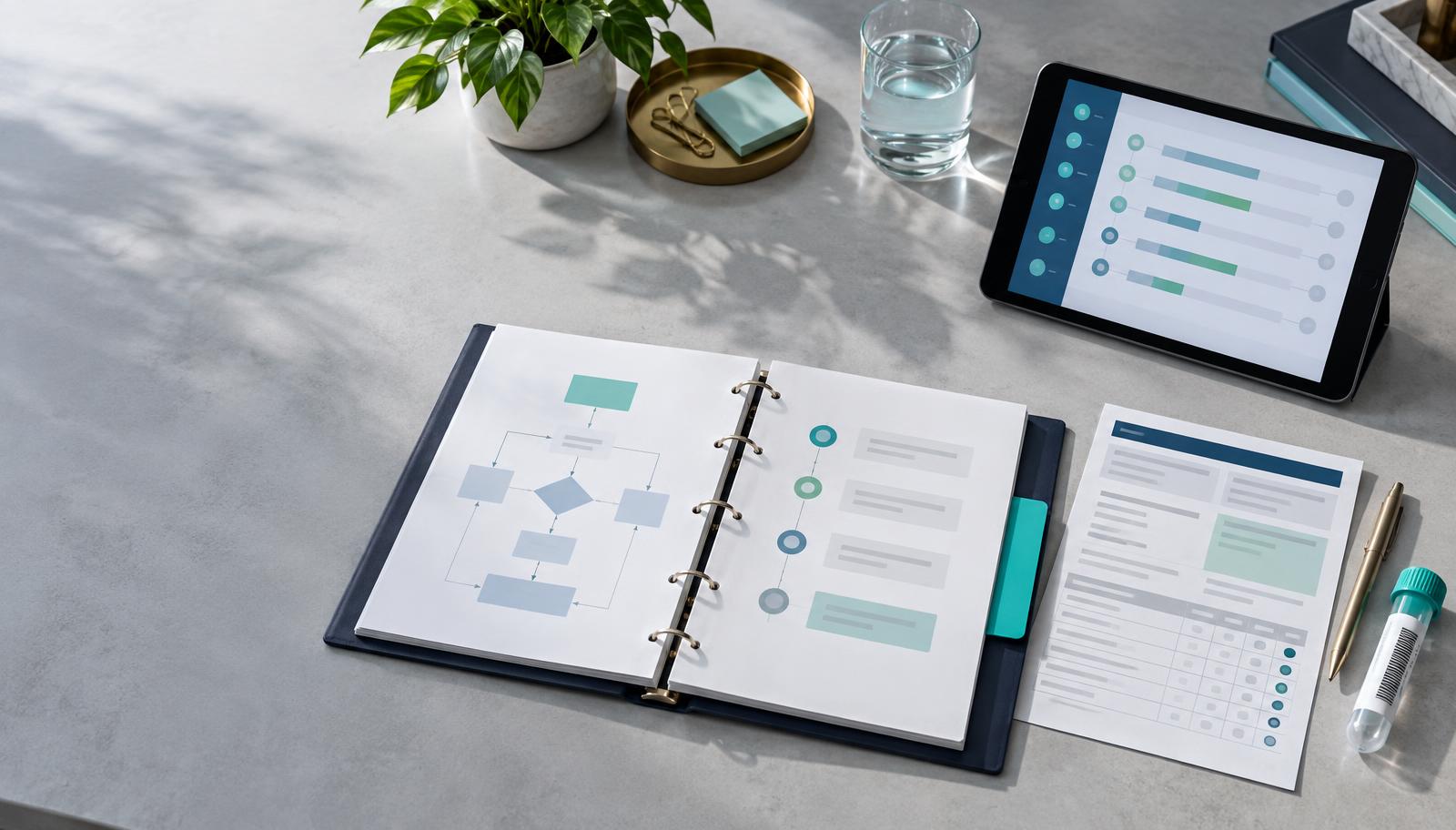
- A written policy describing criteria and intervals
- A repeatable collection and handling workflow
- Result delivery in a form providers can act on
- Documentation connecting each result to a clinical decision
Where TMS fits
TMS designs and coordinates the program: policy, workflow, technology, education and laboratory partner coordination. Testing itself is performed by qualified, independent partner laboratories. TMS is not a laboratory.
What to review first
Before changing anything, review whether your current process has a written policy and whether documentation shows the reason for each test. Those two gaps account for most of the difficulty practices encounter later.
Related TMS pages
Educational content only
This article is general education for healthcare professionals and is not clinical, legal, coding or reimbursement advice. Clinical decisions remain with the treating healthcare provider. Toxicology Management Services is not a laboratory; laboratory testing is performed by qualified laboratory partners. Never submit patient information through this website.
One partner. Complete medication monitoring management.
Talk with a TMS consultant about program design, documentation standards, laboratory partner coordination and technology for your specialty.