Key takeaways
- Medication monitoring is broader than laboratory testing — it includes policy, workflow, documentation, technology and staff processes.
- Clinical decisions, including whether monitoring is appropriate, remain with the treating healthcare provider.
- TMS is not a laboratory. When laboratory testing is involved, testing is performed by qualified laboratory partners.
- TMS helps coordinate the operational components around provider-directed care: program design, laboratory coordination, technology, documentation processes, staff implementation and billing support.
- A practice can evaluate TMS against the parts of its program that are actually breaking, rather than replacing existing relationships wholesale.
What Does Toxicology Management Services Do?
Toxicology Management Services is a medication monitoring management and consulting company that works as an extension of healthcare practices. TMS is not a laboratory. When laboratory testing is involved, testing is performed by qualified laboratory partners. TMS helps practices manage workflows that may include program design, laboratory coordination, LabSource technology, documentation processes, staff implementation, billing support and ongoing operational management.
- Medication Monitoring — program design, implementation and ongoing management
- Tele-TOX — remote and virtually observed collection workflows for telehealth programs
- Technology — digital ordering, results routing and workflow visibility
- Laboratory Coordination — working with qualified laboratory partners and specimen logistics
- Compliance Support — policy, documentation and staff-education workflows (not legal advice)
- Billing & Coding — documentation-first administrative support (no reimbursement guarantees)
- Insurance Contracting — credentialing and payer enrollment administrative support
- Clinical-program implementation — the operational build-out of a new service line
What does TMS actually manage?
The operational layer around a monitoring program — workflow design, ordering and results routing, laboratory coordination, technology, documentation processes, staff education and administrative support. Clinical judgement stays with the provider; analytical testing stays with the laboratory partner.
Is TMS a Laboratory?
No. Toxicology Management Services does not perform laboratory testing, does not interpret results and does not practise medicine. When testing is part of a program, specimens are analysed by qualified laboratory partners operating under their own accreditations, and results are returned to the ordering provider for review. TMS manages the workflow around that relationship.
Is Toxicology Management Services a laboratory?
No. TMS is a medication monitoring management and consulting company that works as an extension of healthcare practices. Laboratory testing is performed by qualified laboratory partners, and clinical interpretation remains with the treating provider.
Why Would a Medical Practice Use TMS?
Practices rarely describe an analytical problem. They describe fragmentation: the laboratory relationship sits in one place, the ordering technology in another, documentation standards in a third, and billing questions somewhere else entirely. Each piece works in isolation while the program as a whole depends on a few experienced staff members remembering how it all connects.
Where fragmentation usually shows up
The same gaps appear across specialties and practice sizes.
- Orders placed differently by different providers or locations
- Documentation that does not consistently show the rationale for an order
- Results that arrive but are not reliably routed into the record and reviewed
- Staff turnover erasing undocumented process knowledge
- Administrative questions from payers landing on clinical staff
What coordination changes
TMS helps define each step, who owns it, and how the record shows it happened — then supports the technology and staff processes that keep it consistent.
How Is TMS Different From Working Directly With a Laboratory?
These are complementary roles, not competing ones. A qualified laboratory performs analytical testing and reports results. TMS manages the program surrounding those results. Many practices keep an existing laboratory relationship and add operational management around it.
| Qualified laboratory partner | Toxicology Management Services | |
|---|---|---|
| Primary role | Analytical testing and reporting | Program management and coordination |
| Accreditation | Holds its own laboratory accreditations | Not a laboratory; holds no testing accreditation |
| Clinical decisions | None — reports results to the ordering provider | None — clinical judgement remains with the provider |
| Practice workflow | Provides requisition and reporting requirements | Designs and supports the practice-side workflow |
| Technology | Laboratory information systems and result delivery | Ordering, routing and workflow visibility for the practice |
| Documentation & staff | Specimen and requisition requirements | Documentation processes, templates and staff education |
What Does Medication Monitoring Management Include?
Medication monitoring management is the operational discipline around a clinical program. The clinical program belongs to the provider; the operational scaffolding is what TMS helps build and maintain.
- Workflow design — the defined path from clinical decision to documented result
- Ordering processes — consistent, documented ordering across providers and sites
- Laboratory coordination — partner selection support, logistics and reporting expectations
- Results routing — getting reports back into the record and in front of the provider
- Staff processes — role-level responsibilities that survive turnover
- Technology — ordering, tracking and visibility across locations
- Documentation — templates and processes that reflect the clinical rationale
- Ongoing management — periodic review as staff, payers and program scope change
- Medication monitoring
- A structured clinical and operational process used by healthcare professionals to help monitor medication use in appropriate patient-care circumstances. Whether monitoring is appropriate for a given patient is a clinical determination made by the treating provider.
Who Does TMS Work With?
TMS may support healthcare organizations where medication monitoring is part of provider-directed care. Need varies by specialty, patient population and existing infrastructure — a monitoring program is not universally necessary, and the treating provider determines clinical appropriateness.
- Pain management practices
- Behavioral health providers
- Addiction treatment programs
- Rehabilitation centers
- Primary care, internal medicine and family medicine
- Orthopedic practices
- Multi-specialty medical groups and multi-location organizations
What Is the TMS Circle of Care?
The Circle of Care describes the four parties in a monitoring program and the operational layer TMS coordinates between them. The patient receives care; the provider makes clinical decisions; the qualified laboratory partner performs analytical testing; the payer makes coverage and reimbursement determinations. TMS coordinates the operational connections — orders, logistics, documentation, technology and administrative follow-through.
How Does a Practice Get Started?
Engagement begins with a conversation about the current workflow rather than a product selection. Scope depends on what a practice already has in place, and timelines depend on the organization, its systems and its staff — TMS does not quote a fixed implementation schedule before assessing a program.
Practical checklist
- Document how orders are placed today, and by whom
- Identify where results arrive and who confirms provider review
- List current laboratory partners and any technology already in use
- Note documentation templates that exist and where gaps appear
- Identify the staff roles that would own each step of the program
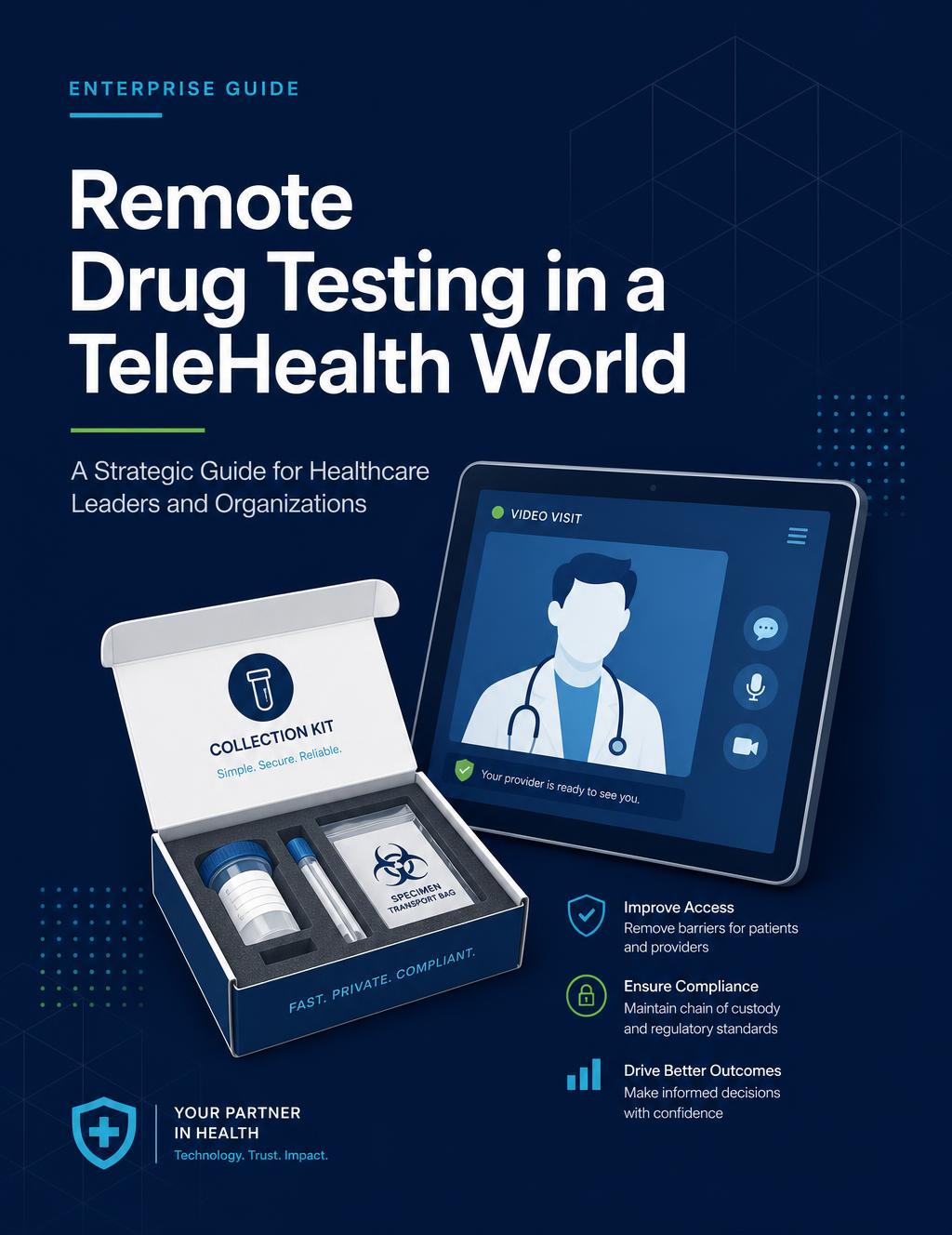
Remote Drug Testing in a TeleHealth World
Learn how healthcare practices can structure remote specimen-collection workflows as part of a telehealth medication-monitoring program.
- Remote workflow overview
- Specimen logistics
- Provider and laboratory partner coordination
Business contact information only. Never submit patient information.
Frequently asked questions
Is TMS a toxicology laboratory?
No. Toxicology Management Services is a medication monitoring management and consulting company that works as an extension of healthcare practices. Laboratory testing is performed by qualified laboratory partners under their own accreditations.
Does TMS perform drug testing?
No. TMS does not perform testing and does not interpret results. TMS coordinates the operational workflow around testing performed by qualified laboratory partners.
What is medication monitoring management?
It is the operational management of a provider-directed monitoring program: workflow design, ordering processes, laboratory coordination, results routing, documentation processes, technology, staff education and ongoing operational review.
Can TMS work with our current laboratory?
TMS can review a practice's existing laboratory relationships and discuss how those relationships may fit within a coordinated medication monitoring workflow.
Does TMS provide technology?
Yes. TMS supports digital ordering, results routing and workflow visibility for participating practices. Capabilities are confirmed during program design rather than promised generically.
Can TMS support multiple practice locations?
Yes. Multi-location organizations typically need one written standard applied consistently across sites, with role-level responsibilities defined per location.
Does TMS make clinical decisions?
No. Clinical evaluation, testing decisions, interpretation, diagnosis, treatment and follow-up decisions remain with the treating healthcare professional.
How can a healthcare organization contact TMS?
Healthcare organizations can request a consultation through the contact page or call the TMS team directly. Never include patient information in a website form or email.
Related TMS pages
Educational content only
This article is general education for healthcare professionals and is not clinical, legal, coding or reimbursement advice. Clinical decisions remain with the treating healthcare provider. Toxicology Management Services is not a laboratory; laboratory testing is performed by qualified laboratory partners. Never submit patient information through this website.
One partner. Complete medication monitoring management.
Talk with a TMS consultant about program design, documentation standards, laboratory partner coordination and technology for your specialty.