Why Medication Monitoring Has Become More Complex
A decade ago, most practices treated medication monitoring as an occasional test order. Today it is an operational program with regulatory, documentation, technology and coordination requirements attached to every specimen. Regulatory expectations have tightened, payer review has become more document-driven, and clinical teams are asked to show not only that a test was performed but why it was ordered and what changed as a result.
- Documentation that connects each order to a clinical rationale
- Workflow that survives staff turnover and multiple sites
- Payer expectations around coverage, coding and medical necessity
- Coordination with qualified laboratory partners and specimen logistics
- Patient experience — collection, communication and follow-up
The operational shift
The difficulty practices report is rarely analytical. It is administrative: who does what, when, and how the record shows it happened consistently.
Why Practices Need More Than Laboratory Testing
A qualified laboratory produces an accurate result. It does not design the practice's monitoring policy, train the staff, build the ordering workflow, prepare documentation templates, guide coding, or manage the relationship between the practice, the payer and the performing laboratory. Those gaps are where programs stall — and they remain open no matter which laboratory performs the analysis.
- Practice workflows that define each step and owner
- Technology for ordering, tracking and results delivery
- Provider and staff education that outlasts turnover
- Laboratory coordination and specimen logistics
- Compliance and documentation support
- Billing and coding guidance
- Operational consistency across providers and locations
Accurate results and a functioning program are two different problems. Practices need help with the second one.
What Makes Toxicology Management Services Different
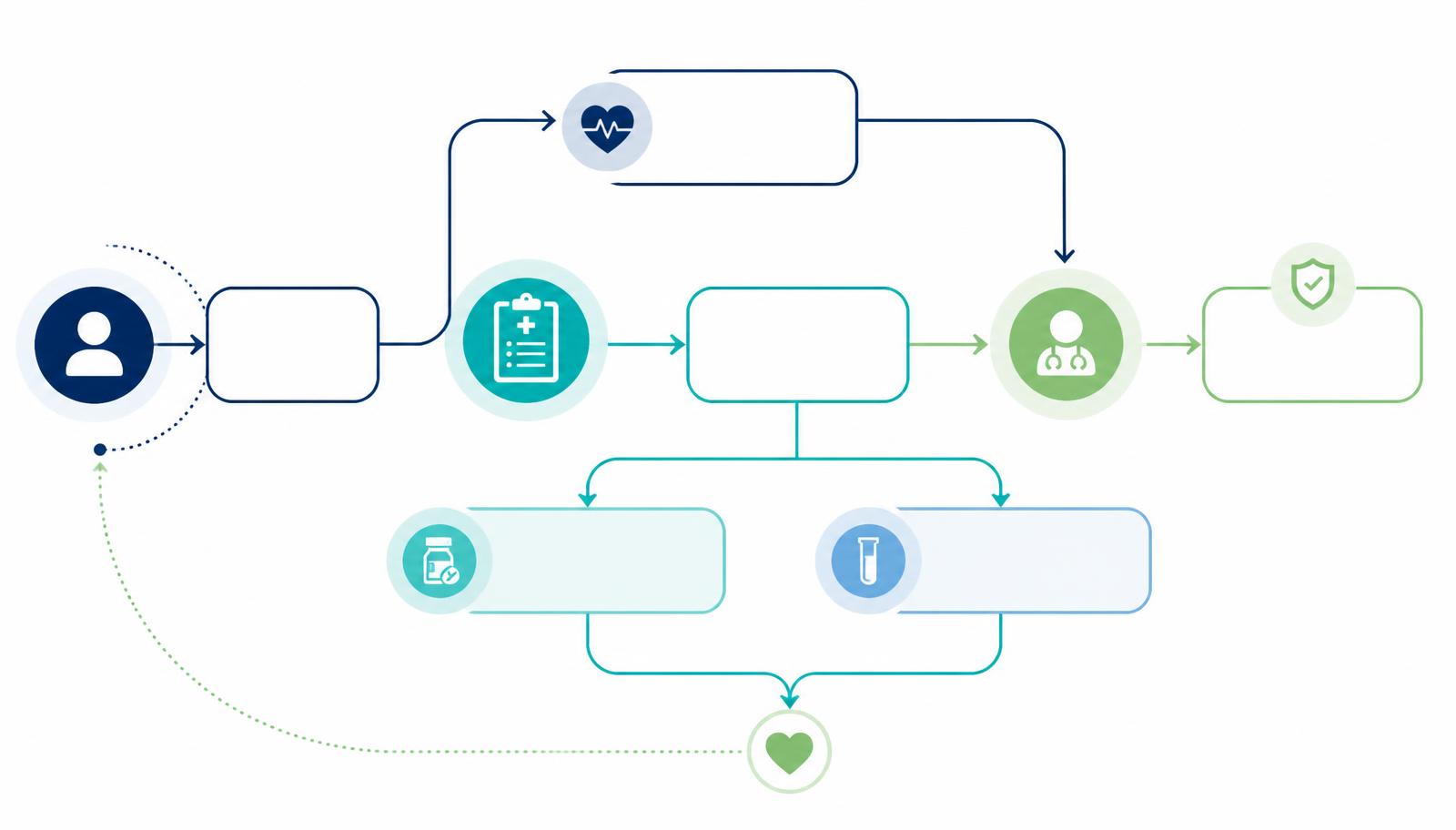
TMS is not a laboratory. TMS is the operational partner that helps healthcare organizations design, implement and maintain medication monitoring programs — coordinating testing through qualified, independent laboratory partners while supporting implementation, workflow optimization, technology, provider education and practice management. Clinical decisions remain with the treating provider; analytical testing remains with the performing laboratory.
Positioning, stated plainly
TMS provides management, consulting and technology. Testing is performed by qualified laboratory partners. We never represent ourselves as a clinical laboratory.
Services That Support Healthcare Practices
TMS supports the full operational footprint of a monitoring program, and practices engage the parts they need rather than a fixed bundle.
- Medication Monitoring program design and management
- Tele-TOX remote and virtually observed collection
- Mental Health Assessments coordination
- Genetic Testing (pharmacogenomic) program support
- Allergy Testing program support
- Billing & Coding guidance
- Insurance Contracting and credentialing support
- Online Test Management and digital ordering
- Laboratory Network Coordination
- Compliance & Regulatory Support
- Technology Platform implementation and integration
Benefits for Healthcare Organizations
Practices that formalize their monitoring program generally describe the same set of operational improvements — not because of any single tool, but because responsibilities, documentation and technology finally align.
- Improved workflow with defined steps and owners
- Operational efficiency through less rework and fewer phone calls
- Better documentation tied to clinical decisions
- Practice support for administrative and payer-facing tasks
- Clinical coordination between providers, staff and partner laboratories
- Provider education that keeps standards consistent
- Technology integration with existing systems
- Laboratory coordination and predictable logistics
- Scalable solutions across additional sites and service lines

Why Choose TMS
One Partner. Complete Medication Monitoring Management. Practices choose TMS because a single accountable partner coordinates the program end to end — policy, workflow, technology, education, compliance support and laboratory coordination — instead of assembling those pieces from separate vendors. TMS is the consulting and technology partner, not the laboratory, and that distinction is what allows us to advocate for the practice's operational interests.
One Partner. Complete Medication Monitoring Management.
Frequently asked questions
Is Toxicology Management Services a laboratory?
No. TMS is a medication monitoring management and consulting company that works as an extension of healthcare practices. Analytical testing is performed by qualified, independent laboratory partners that TMS coordinates on behalf of the practice.
What does TMS actually do for our practice?
TMS helps design the monitoring policy, build the ordering and collection workflow, implement technology for ordering and results delivery, educate providers and staff, support documentation and compliance, provide billing and coding guidance, and coordinate the partner laboratory relationship and specimen logistics.
Do we have to change laboratories to work with TMS?
Not necessarily. TMS reviews the current arrangement first. Where an existing relationship works well, TMS coordinates around it. Where coverage, turnaround or reporting gaps exist, TMS discusses qualified partner options with the practice.
How does TMS support compliance?
TMS helps establish written policies, documentation standards, staff education and internal review cadence so the record consistently reflects the clinical reasoning behind each order. TMS provides support and guidance; regulatory responsibility remains with the practice.
Does TMS make billing determinations?
No. TMS provides coding and documentation guidance and staff education. Claim submission and billing determinations remain the responsibility of the practice and its billing partners.
Which types of organizations does TMS work with?
Physician practices across specialties including pain management, behavioral health, addiction treatment, primary care, internal medicine, orthopedics, integrative and functional medicine, along with rehabilitation centers, skilled nursing, home health, urgent care and multi-specialty groups.
How long does implementation take?
It depends on the number of providers, sites and systems involved. TMS scopes implementation during the initial consultation and does not quote a fixed timeline before understanding the practice's current workflow.
How do we get started?
Schedule a consultation. A TMS consultant reviews your current monitoring process, identifies operational gaps and outlines a program built for your specialty, documentation needs and payer mix.
Related TMS pages
Educational content only
This article is general education for healthcare professionals and is not clinical, legal, coding or reimbursement advice. Clinical decisions remain with the treating healthcare provider. Toxicology Management Services is not a laboratory; laboratory testing is performed by qualified laboratory partners. Never submit patient information through this website.
One partner. Complete medication monitoring management.
Talk with a TMS consultant about program design, documentation standards, laboratory partner coordination and technology for your specialty.